

What Are the Biggest Fashion Trends in 2026? Discover the latest fashion trends shaping 2026, from bold colors and statement prints to relaxed denim, modern layering, stylish footwear, and sustainable fashion. Explore the season’s most influential styles, including minimalist outfits, romantic details, oversized silhouettes, vintage-inspired looks, contemporary streetwear, and versatile wardrobe essentials.
Whether you are refreshing your everyday wardrobe or searching for fresh outfit inspiration, this guide highlights the key fashion movements worth knowing this year. What Are the Biggest Fashion Trends in 2026, Find the answers and discover easy ways to incorporate the season’s biggest trends into your wardrobe with confidence and effortless style.
Introduction
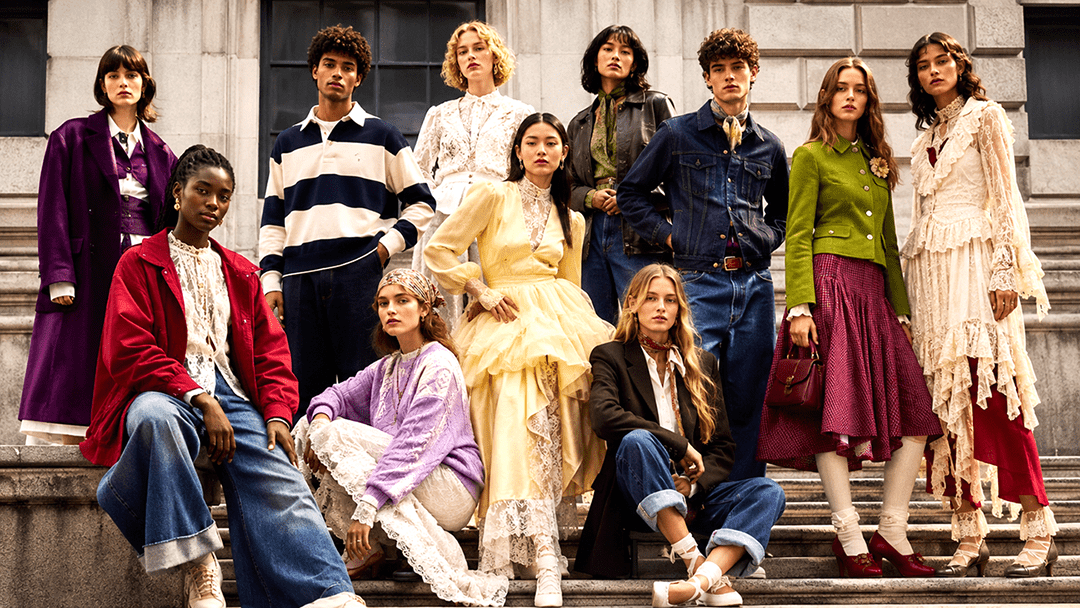
Fashion in 2026 is more expressive, versatile, and personal than ever. From nostalgic ’90s fashion and poetcore to bold colors, romantic lace, raw denim, relaxed sportswear, and statement accessories, this year’s biggest trends offer something for every personal style. At the same time, technology and sustainability are transforming how clothing is designed, produced, purchased, and reused.
What Are the Biggest Fashion Trends in 2026? So, what are the biggest fashion trends in 2026? The answer goes beyond a single color, silhouette, or must-have garment. This year’s fashion landscape combines personal expression, nostalgic styling, comfortable everyday clothing, circular fashion, AI-powered trend forecasting, innovative textiles, and digital design.
Whether you’re refreshing your wardrobe, looking for outfit inspiration, planning seasonal shopping, or simply trying to understand what’s trending, knowing the major fashion trends in 2026 can help you make smarter style choices.
From aubergine and creamy yellow to polka dots, gingham, lace, structured jackets, ballet sneakers, and raw denim, discover the key fashion movements shaping what people will wear throughout 2026.
What Are the Biggest Fashion Trends in 2026? : A Complete Guide to the Styles Defining the Year
Fashion in 2026 is not about following one universal look. Instead, the biggest shift is toward personal expression, nostalgia, technology, sustainability, and wearable experimentation. From the return of vintage-inspired silhouettes to bold color palettes, romantic details, relaxed sportswear, and digitally enabled design, this year’s fashion landscape is more diverse than ever.
So, what are the biggest fashion trends in 2026? The answer depends partly on your personal style, but several movements are clearly shaping what people are wearing, buying, designing, and searching for. Current fashion coverage points toward everything from poetcore aesthetic and vintage ’90s mall fashion to bold layering, statement colors, brooches, structured tailoring, and expressive textures.
At the same time, fashion is changing behind the scenes. AI-powered fashion trend forecasting, immersive 3D design, biofabricated materials, circular business models, and digital traceability are influencing how clothing is created and consumed. IFA Paris describes 2026 as a period in which fashion’s transformation goes beyond aesthetics into production, technology, sustainability, and storytelling.
For shoppers, that means the best fashion trends in 2026 are not necessarily the loudest ones. The most useful trends are those you can adapt to your existing wardrobe, lifestyle, climate, budget, and personality.
Let’s explore the biggest fashion movements defining 2026 and how you can actually wear them.
1. Nostalgia Is Back—But It Looks More Personal in 2026
One of the clearest themes of 2026 fashion is nostalgia. However, designers and consumers are not simply copying previous decades. They are taking familiar references and mixing them with modern proportions, comfort, and personal styling.
Poetcore: The Softer Side of Academic Dressing
The poetcore aesthetic is one of the most distinctive style movements gaining attention in 2026. Think relaxed cardigans, literary-inspired layers, button-down shirts, soft trousers, vintage-looking accessories, and slightly intellectual styling.
Unlike highly polished preppy outfits, poetcore feels more lived-in. It can look as though you have just walked out of a quiet bookstore, university library, or independent café.
Teen Vogue identifies poetcore as a major fall 2026 trend and connects its popularity with Pinterest trend forecasting and the broader evolution of academic-inspired aesthetics.
The easiest way to try poetcore is not to purchase an entirely new wardrobe. Start with pieces you may already own:
- A relaxed knit cardigan
- A white or striped button-up shirt
- Straight-leg trousers
- Loafers or ballet-inspired footwear
- A structured tote
- A vintage-style belt
- A simple brooch
The result feels intellectual without becoming costume-like.
Vintage ’90s Mall Fashion Makes a Comeback
Another major answer to what are the biggest fashion trends in 2026 is the return of vintage ’90s mall fashion.
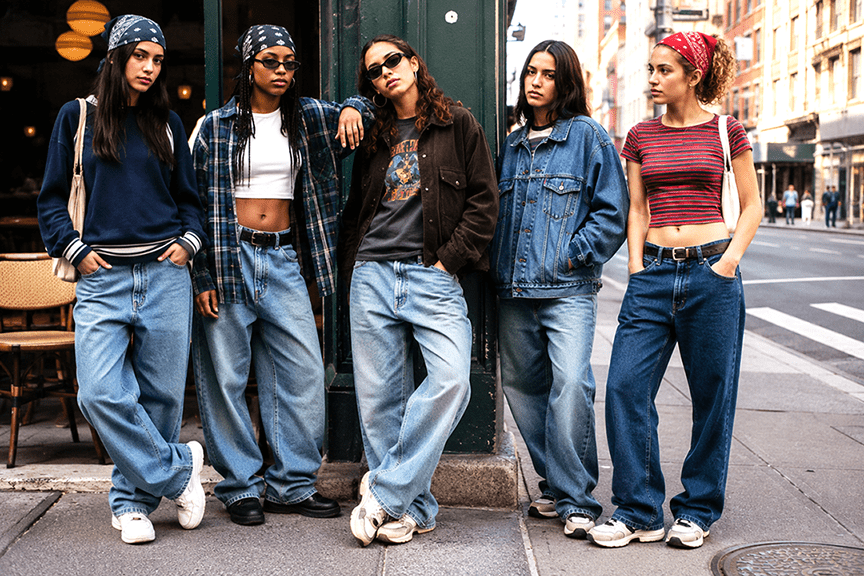
Think bright denim, graphic T-shirts, casual jackets, baggy jeans, colorful patterns, denim-on-denim outfits, and comfortable sneakers. The appeal comes partly from the simplicity of the decade. You can put together an outfit without spending an hour deciding what matches.
The 2026 interpretation is especially interesting because it combines ’90s nostalgia with today’s relaxed silhouettes. Teen Vogue notes the renewed interest in vintage Gap-style dressing, Calvin Klein-inspired minimalism, colorful denim, and denim-on-denim combinations.
For a modern interpretation, try pairing straight or relaxed denim with a fitted top and an oversized jacket. Add a simple sneaker and one statement accessory.
Dadcore and Relaxed Everyday Dressing
Dadcore fashion continues the same nostalgic direction but takes it into practical everyday clothing.
Graphic T-shirts, relaxed trousers, baggy denim, sneakers, casual jackets, and uncomplicated accessories form the foundation. The goal is not to look perfectly styled. It is to look naturally put together.
That makes dadcore particularly useful for people who value comfort. It can work for weekend shopping, casual meetups, travel, coffee dates, or everyday errands.
Low-Rise Pants and the Y2K Influence
The return of low-rise pants is another example of fashion recycling older ideas. However, 2026 does not require you to recreate an early-2000s outfit from head to toe.
Instead, low-rise or lower-waisted trousers can be balanced with a structured jacket, fitted knit, oversized shirt, or long coat.
The important lesson is that trends should be adapted to your proportions and comfort level rather than followed blindly.
2. Prints, Colors, Texture, and Romantic Details Are Getting Bolder
If nostalgia is one side of 2026 fashion, expressive styling is the other. This year’s fashion conversation includes stronger colors, decorative details, interesting textures, and combinations that make simple outfits more memorable.
Polka Dot Fashion and Gingham Are Easy Entry Points
Polka dot fashion is particularly wearable because the print can be introduced at almost any intensity.
A small polka-dot blouse works for an office-inspired outfit. A larger dot print can make a dress feel playful. Accessories such as scarves and bags offer an even easier way to experiment.
Checked and gingham prints provide another route into patterned dressing. They work especially well with denim, neutral trousers, cardigans, and casual tailoring.
The advantage of both prints is versatility. You can make them romantic, preppy, minimalist, or playful depending on the rest of your outfit.
Romantic Fabrics and Lace Return
Soft, feminine details are also becoming important. Romantic fabrics and lace bring texture and movement to everyday wardrobes.
Lace does not have to mean a formal evening look. A lace-trimmed camisole under a blazer, a lace skirt with a simple sweater, or a romantic blouse with denim can make the trend feel modern.
Current fall 2026 shopping coverage is also highlighting combinations of lace, silk, and ruffles as accessible ways to introduce romantic styling into everyday outfits.
Ruffles and Bubble-Hem Silhouettes
Fashion in 2026 is also experimenting with shape.
Ruffles and bubble-hem silhouettes add volume and movement to dresses, skirts, tops, and sleeves. These details can transform an otherwise simple garment into a statement piece.
The key is balance. If your skirt has a dramatic bubble hem, consider keeping the top relatively streamlined. If the top has oversized ruffles, a simpler bottom can prevent the outfit from looking visually crowded.
Alternative Animal Prints
Animal print is no longer restricted to traditional leopard patterns.
Alternative animal prints allow shoppers to experiment with unusual interpretations, abstract patterns, unusual color combinations, and smaller statement details.
A printed shoe, belt, handbag, or skirt can introduce the trend without overwhelming the entire outfit.
Purple Hues, Aubergine, and Vanilla Yellow
Color is one of the easiest ways to update a wardrobe in 2026.
Purple hues / aubergine are particularly useful because deep purple can function almost like a neutral. It works with black, cream, denim, gray, burgundy, and even contrasting greens.
At the opposite end of the spectrum, creamy yellow / vanilla yellow brings softness and warmth. It is easier to wear than an extremely bright yellow and works beautifully with white, beige, brown, denim, and muted green.
Current fall 2026 coverage is also identifying royal purple as an updated wardrobe basic and highlighting purple and red in transitional styling.
Then there is stand-out chartreuse. This energetic green is much harder to ignore, which is exactly why it works so well as an accent color.
You don’t need an entire chartreuse outfit. Try a bag, shoe, scarf, top, or jewelry instead.
Red Outerwear and Cherry Red Accents
Red outerwear / cherry red accents provide another way to make a neutral wardrobe feel current.
A cherry-red jacket can become the focal point of an otherwise simple outfit. If outerwear feels too dramatic, use red through a handbag, shoes, belt, scarf, or small accessory.
This reflects a broader 2026 movement toward not-so-neutral color palettes, where wardrobes are moving beyond beige, black, white, and gray.
The goal isn’t to abandon neutrals. It is to give them more personality.
3. Layering, Sportswear, and Updated Classics Make Fashion More Wearable
Some of the strongest 2026 trends are surprisingly practical. Instead of focusing only on dramatic runway pieces, fashion is finding new ways to make everyday clothing more interesting.
Layered Outfits and Transitional Layering
Layered outfits and transitional layering are among the most useful trends of 2026.
Layering allows you to extend the life of summer clothing into cooler weather while also creating more visual interest.
Try combinations such as:
- A shirt underneath a sweater
- A dress over trousers
- A T-shirt under a button-down
- A cardigan over a fitted dress
- A skirt layered with tights and a jacket
- A lightweight summer dress underneath structured outerwear
Teen Vogue specifically identifies layering as a key 2026 direction and recommends experimenting with multiple layers and unexpected combinations.
Recent street-style coverage also shows summer-to-autumn dressing through dresses over trousers, jumpers tied around the waist, and other transitional styling techniques.
Knitted Polo Shirts and Rugby-Inspired Dressing
Knitted polo shirts provide an excellent example of how sportswear is becoming more polished.
Rather than wearing a traditional sporty polo, look for refined knit textures, structured collars, sophisticated colors, and slightly relaxed fits.
This trend works with tailored trousers, straight-leg jeans, skirts, or relaxed shorts.
It can also be dressed up with jewelry and a structured bag.
Bold Rugby Stripes
Bold rugby stripes bring a sporty, collegiate energy to everyday wardrobes.
Horizontal stripes can make a simple sweater or polo immediately recognizable as a statement piece. For a balanced outfit, combine a striped top with solid-colored trousers or denim.
If you’re already wearing patterned bottoms, keep the stripe scale smaller or choose complementary colors.
Turned-Up Cuffs
A surprisingly simple styling detail is the turned-up cuffs trend.
Instead of treating sleeves and trouser hems as something purely functional, 2026 styling makes them part of the visual design.
Folded shirt cuffs, rolled denim, contrasting sleeve layers, or deliberately exposed cuffs can add personality without requiring a new garment.
It is a perfect example of how small styling decisions can make existing clothes feel fresh.
Layered Sarongs
Layered sarongs show how summer pieces can move beyond the beach.
Try wearing a sarong over trousers, leggings, or a simple dress. The draped fabric creates movement and can add color or print without requiring a completely new outfit.
This is especially useful for shoppers who want versatile clothing that can transition between seasons and occasions.
Double-Sleeve Styling
Double-sleeve styling brings a playful early-2000s influence back into modern wardrobes.
The concept is simple: layer a short-sleeve or lightweight piece over another top so that the sleeves become part of the look.
Current autumn 2026 trend coverage identifies double sleeves as a renewed take on early-2000s skater styling.
It works particularly well with simple color combinations because the silhouette itself provides the visual interest.
Track Pants as Everyday Fashion
Track pants as everyday fashion demonstrate how the line between athleticwear and everyday clothing continues to disappear.
The modern approach is not necessarily about wearing a complete tracksuit. Instead, pair polished track pants with a structured blazer, fitted knit, button-up shirt, or sophisticated jacket.
This creates a high-low combination: relaxed bottoms with elevated pieces.
Dressed-Down Party Skirts
One of the most interesting 2026 styling ideas is dressed-down party skirts.
Instead of saving sequins, satin, embellishments, or statement skirts exclusively for formal events, wear them with casual pieces.
For example, pair a dressy skirt with:
- A simple T-shirt
- A relaxed sweater
- Sneakers
- A casual jacket
- A denim shirt
This approach makes occasion clothing more versatile and supports the broader movement toward buying pieces that can be worn in multiple ways.
Satin and Silk Wardrobe Basics
Satin and silk wardrobe basics add sophistication without requiring elaborate styling.
A satin skirt can be paired with a cotton T-shirt. A silk-inspired blouse can work with denim. A simple slip-style dress can be layered beneath a blazer.
The modern luxury approach is increasingly about contrast rather than dressing head-to-toe in expensive-looking materials.
4. Footwear, Tailoring, and Accessories Are Becoming Statement Makers
Clothing may dominate fashion conversations, but footwear and accessories often determine whether an outfit looks current.
Ballet Sneakers and Wedge Sneakers
Ballet sneakers combine the delicacy of ballet-inspired footwear with the practicality of a sneaker. They are particularly useful for people who want something softer than a traditional athletic shoe but more comfortable than formal footwear.
At the other end of the spectrum, wedge sneakers add height and structure while retaining a casual attitude.
Recent 2026 fashion coverage has highlighted ballet-inspired sneakers as part of the current footwear conversation.
Shaped and Structured Jackets
Shaped and structured jackets are another important investment category.
Instead of oversized tailoring dominating every outfit, more defined shoulders, shaped waists, sculptural silhouettes, and structured construction can create a polished appearance.
This is particularly useful when the rest of the outfit is relaxed.
For example, try a structured jacket with wide-leg trousers, relaxed jeans, or track pants.
The contrast creates balance.
Tied Sweaters
The tied sweaters trend demonstrates how styling can matter as much as the garment itself.
Instead of wearing your sweater normally, tie it around the waist, shoulders, or across the body.
This creates an additional layer and gives the outfit a casual, preppy, or Scandinavian-inspired feeling.
Recent street-style coverage has specifically highlighted sweaters tied around the waist as a practical way to transition summer wardrobes into autumn.
Bandana Headwear
Bandana headwear is another low-cost way to experiment with nostalgia.
Wear a bandana with denim and a T-shirt for a relaxed ’90s look, or combine it with tailoring for a more unexpected contrast.
The accessory can also bring together colors from different parts of your outfit.
Brooch Styling Makes a Surprisingly Strong Return
Perhaps one of the easiest 2026 trends to recreate is brooch styling.
Brooches can be placed on blazers, shirts, coats, scarves, bags, ties, or even unexpected accessories.
Teen Vogue notes that brooches are gaining momentum through Pinterest trend forecasting and runway appearances, while also suggesting that shoppers consider vintage or family pieces rather than immediately purchasing something new.
That makes brooches particularly compatible with circular fashion.
A vintage brooch can give an old blazer an entirely different personality.
5. Fashion’s Biggest Change Is Happening Behind the Clothes
When discussing what are the biggest fashion trends in 2026, it would be incomplete to focus only on what people wear.
Some of the most important developments are changing how fashion is designed, manufactured, sold, reused, and experienced.
Circular Fashion Is Moving Into the Mainstream
Circular fashion is becoming increasingly important as consumers and brands consider what happens to clothing after purchase.
The model includes upcycled fashion, second-hand and resale fashion, garment repair and fashion rental, recycling, redesign, and longer product lifecycles.
IFA Paris describes circularity as a strategic and economic driver for fashion in 2026, highlighting second-hand, repair, rental, and garment transformation as increasingly important areas.
For consumers, circular fashion can be surprisingly practical.
Before buying something new, ask:
Can I style something I already own differently?
Can I repair an existing garment?
Can I buy second-hand?
Can I choose a piece that works across several occasions?
These questions can result in a more interesting wardrobe—not simply a smaller one.
Slow Fashion and Craftsmanship
Slow fashion is closely connected to quality, longevity, and thoughtful consumption.
This doesn’t necessarily mean avoiding trends completely. Instead, it means choosing trends that fit your personal style and purchasing fewer pieces that you will actually wear.
There is also renewed interest in craftsmanship and hand embroidery, where the human element becomes part of the garment’s value.
Natural dyeing and traditional weaving similarly connect clothing with cultural knowledge and artisanal production.
For shoppers, these details can make an outfit feel more individual than mass-produced trend pieces.
Biofabricated Textiles and Plant-Based Leather
Fashion’s material innovation is moving rapidly.
Biofabricated textiles include materials developed through biological processes and laboratory research. One increasingly discussed category is plant-based leather / mushroom leather, including mycelium-based materials.
IFA Paris identifies plant-based leathers made from mycelium, apple skin, and algae alongside recyclable yarn innovations as examples of the materials revolution developing in 2026.
The interesting part is that material innovation is no longer solely about sustainability. Designers are also asking whether new materials can create different textures, performance characteristics, aesthetics, and emotional associations.
Recyclable Mono-Material Textiles
Recyclable mono-material textiles are another important development.
A garment made from compatible or single-material components can potentially be easier to recycle than clothing constructed from multiple materials that are difficult to separate.
The challenge is scaling these innovations from laboratories and pilot projects into commercially viable production. IFA Paris specifically identifies scalability as a major challenge for textile deep-tech companies.
Digital Product Passport and Textile Traceability
Another major development is the Digital Product Passport and textile traceability.
The basic idea is that digital information can provide greater visibility into a product’s materials, origins, production, and lifecycle.
IFA Paris notes that the EU Digital Product Passport is expected to introduce textile traceability requirements beginning in 2027, making traceability an important issue for brands preparing now.
For consumers, better traceability could eventually make it easier to understand what clothing is made from and where it comes from.
6. AI, Immersive Design, and Consumer Culture Are Redefining Fashion
Technology is not replacing fashion creativity. Instead, it is becoming another tool designers, brands, forecasters, and consumers can use.
AI-Powered Fashion Trend Forecasting
AI-powered fashion trend forecasting is changing how brands identify emerging consumer preferences.
Traditionally, trend forecasting depended heavily on runway shows, designers, cultural observation, retail data, and expert analysis.
Today, social media provides enormous quantities of visual and behavioral information. AI can help identify patterns across these signals.
Heuritech specifically describes social media and artificial intelligence as changing the path of trend forecasting and uses data-driven analysis alongside fashion expertise to identify future trends.
That doesn’t mean AI decides what everyone will wear.
Human taste still matters.
Instead, AI can help identify patterns earlier, allowing designers and retailers to understand where consumer interest may be moving.
Immersive 3D Fashion Design
Immersive 3D fashion design is also becoming increasingly relevant.
Designers can create and manipulate garments digitally before producing physical samples. This can help teams visualize silhouettes, experiment with proportions, and collaborate remotely.
Virtual Reality Fashion Prototyping
Virtual reality fashion prototyping takes this concept further by allowing designers to experience garments in three-dimensional environments.
IFA Paris highlights the increasing use of virtual reality and 3D modeling during ideation and prototyping, noting tools such as Gravity Sketch, CLO3D, and Open Brush.
The benefit is not just novelty.
Digital prototyping can reduce the need for repeated physical samples, potentially saving time and material while enabling designers to experiment more freely.
Fashion Deep Tech
These developments form part of the broader world of fashion deep tech.
This includes advanced materials, AI, 3D design, digital manufacturing, textile innovation, traceability systems, and other technologies that fundamentally change fashion processes.
The most exciting part is how these areas overlap.
Imagine a future garment designed entirely in 3D, produced using a bio-based material, accompanied by a digital product passport, sold through a personalized recommendation system, and eventually returned to a resale or recycling program.
That is much more than a trend in clothing. It is a transformation of the fashion system.
Emotional Fashion Branding and Fashion Storytelling
Technology alone isn’t enough.
Consumers still want brands to mean something.
This is why emotional fashion branding and fashion storytelling and lifestyle experiences are becoming increasingly important.
IFA Paris argues that fashion brands in 2026 need to create deeper emotional connections and meaningful experiences rather than relying solely on traditional promotional campaigns.
A fashion brand can therefore become more than a place to buy clothing. It can create a lifestyle, community, aesthetic, or story that customers want to participate in.
This is particularly powerful for digital-first fashion businesses because social media makes storytelling an everyday part of brand communication.
How Should You Actually Wear the Biggest Fashion Trends in 2026?
The biggest mistake would be trying to wear every trend simultaneously.
The better approach is personal style and wearable trend adoption.
Choose one or two trends that naturally fit your existing wardrobe.
For example: What Are the Biggest Fashion Trends in 2026?
For a minimalist wardrobe:
Try aubergine, structured jackets, ballet sneakers, satin basics, or ’90s-inspired minimalism.
For a romantic style:
Experiment with lace, ruffles, soft yellow, floral prints, and delicate accessories.
For a sporty wardrobe:
Try track pants, rugby stripes, knitted polo shirts, wedge sneakers, and layered styling.
For a vintage-inspired wardrobe:
Explore ’90s mall fashion, dadcore, bandanas, brooches, relaxed denim, and low-rise pants.
For an expressive wardrobe:
Try chartreuse, cherry red, alternative animal prints, bold textures, and unusual color combinations.
The most important rule is simple: a trend should work for you, not the other way around.
What Will Define Fashion Beyond the Trends?
Looking across the biggest developments in 2026, several broader patterns become clear.
First, fashion is becoming more personal. Social media allows consumers to discover micro-trends rapidly, but it also gives people more opportunities to develop their own aesthetics.
Second, nostalgia remains powerful. From vintage ’90s mall fashion and dadcore fashion to low-rise silhouettes and early-2000s-inspired layering, previous decades continue to provide inspiration.
Third, color and texture are becoming important tools for self-expression. Aubergine, vanilla yellow, chartreuse, cherry red, polka dots, gingham, lace, ruffles, and textured fabrics offer consumers many ways to refresh familiar clothing.
Fourth, comfort remains essential. Track pants, knitted polos, sneakers, relaxed denim, and layering demonstrate that fashionable clothing does not have to be uncomfortable.
Finally, the fashion industry itself is changing. Circular fashion, slow fashion, biofabricated textiles, AI-powered trend forecasting, virtual reality fashion prototyping, and digital traceability show that innovation is taking place far beyond the runway.
Schema-Ready FAQs
FAQ 1: What are the biggest fashion trends in 2026?
The biggest fashion trends in 2026 include nostalgic ’90s-inspired fashion, poetcore, raw denim, romantic lace, bold prints, expressive colors, layered outfits, structured jackets, ballet sneakers, relaxed sportswear, circular fashion, and technology-driven fashion design.
FAQ 2: What colors are trending in fashion in 2026?
Popular 2026 fashion color directions include aubergine and other purple hues, creamy or vanilla yellow, cherry red, chartreuse, and more expressive combinations that move beyond traditional neutral palettes.
FAQ 3: Is ’90s fashion back in 2026?
Yes. ’90s-inspired dressing continues to influence 2026 fashion through relaxed denim, casual layering, simple silhouettes, nostalgic accessories, and vintage-inspired styling.
FAQ 4: Is raw denim trending in 2026?
Raw or brut denim is an important part of the renewed interest in structured, vintage-inspired denim. It can be styled casually with T-shirts and sneakers or elevated with shirts and structured jackets.
FAQ 5: What is the poetcore aesthetic?
The poetcore aesthetic combines literary and academic-inspired clothing with relaxed, vintage-feeling pieces such as cardigans, button-down shirts, trousers, loafers, and understated accessories.
FAQ 6: What are the sustainable fashion trends for 2026?
Important sustainable fashion developments include circular fashion, upcycling, second-hand and resale clothing, garment repair, fashion rental, slow fashion, innovative bio-based materials, recyclable textiles, and improved textile traceability.
FAQ 7: Are bold colors trending in 2026?
Yes. Fashion is moving beyond traditional neutral palettes, with shades such as cherry red, chartreuse, aubergine, and creamy yellow providing more expressive alternatives.
FAQ 8: What footwear is trending in 2026?
2026 footwear trends include ballet sneakers, wedge sneakers, and other styles that combine comfort with fashion-forward silhouettes.
FAQ 9: How can I follow fashion trends without completely changing my wardrobe?
Start with one trend at a time. Introduce a new color, accessory, print, shoe, or layering technique while keeping the rest of your outfit familiar. This makes trends easier to wear and more personal.
FAQ 10: How is AI changing fashion in 2026?
AI is increasingly being used for trend forecasting, consumer analysis, design development, personalization, and other fashion processes. Social-media data can also help identify emerging consumer-driven trends.
Conclusion: What Are the Biggest Fashion Trends in 2026?
The answer to “What Are the Biggest Fashion Trends in 2026?” isn’t limited to one particular style. Instead, 2026 fashion is defined by the combination of nostalgia, personal expression, comfort, bold colors, creative layering, sustainability, and technology.
From poetcore and vintage ’90s mall fashion to raw denim, lace, polka dots, gingham, aubergine, vanilla yellow, cherry red, chartreuse, structured jackets, ballet sneakers, and relaxed sportswear, there are plenty of ways to refresh your wardrobe.
Beyond aesthetics, circular fashion, slow fashion, resale, repair, rental, upcycling, biofabricated textiles, AI-powered fashion forecasting, 3D design, and digital traceability are helping shape the future of the industry.
The best approach is not to follow every trend. Choose the colors, silhouettes, fabrics, and styling ideas that suit your lifestyle and make them your own.
For Read More: Blogs
Follow Us On: YouTube
Please follow and like us:


