


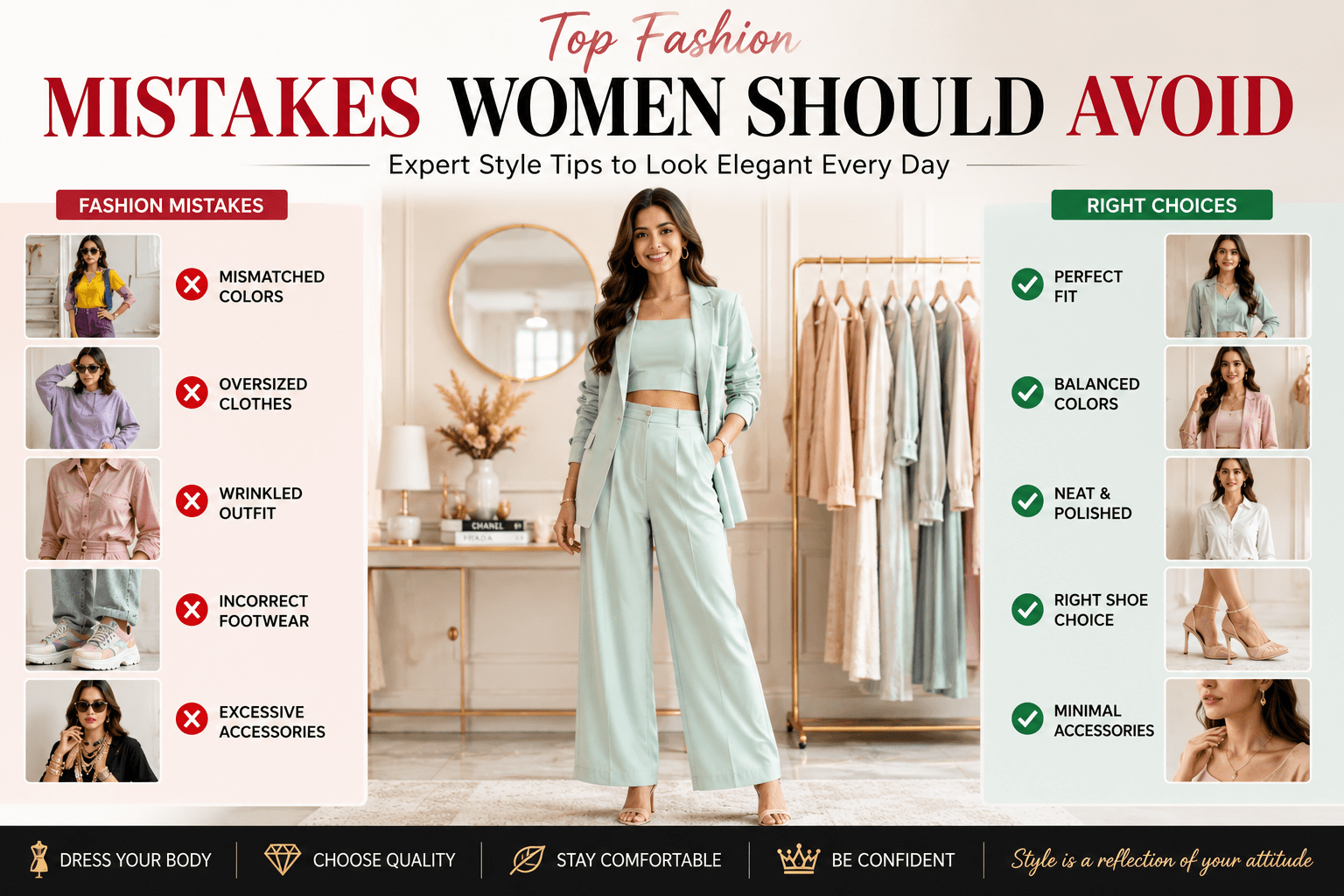
Discover the top fashion mistakes women should avoid with expert styling tips on fit, colors, wardrobe essentials, accessories, and timeless fashion choices.
Expert Style Guide:
Top Fashion Mistakes Women Should Avoid
Fashion is more than just wearing beautiful clothes—it’s a powerful form of self-expression. The way you dress influences first impressions, boosts self-confidence, and reflects your personality before you even say a word.
However, even the most fashionable women can make styling mistakes that affect their overall appearance. The good news? Most fashion mistakes are easy to fix once you understand the fundamentals of great style.
Whether you’re updating your wardrobe, shopping online, dressing for work, attending a wedding, or simply putting together an everyday outfit, avoiding a few common styling errors can instantly elevate your look.
Fashion isn’t about owning the most expensive clothes or following every runway trend. Instead, it’s about wearing outfits that flatter your figure, suit your lifestyle, and make you feel comfortable and confident.
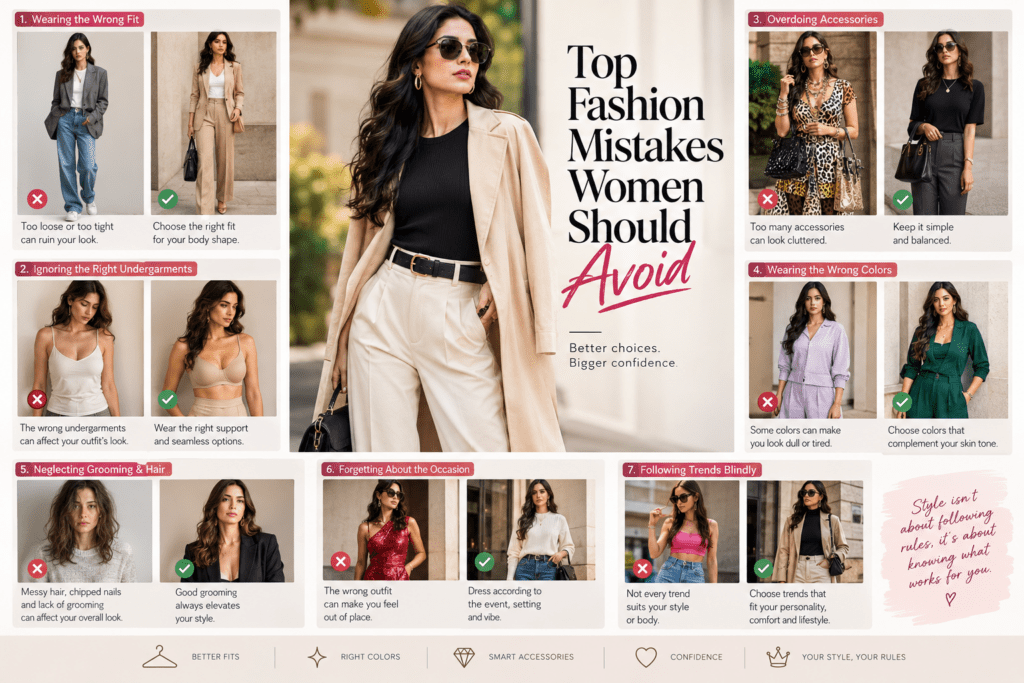
One of the biggest misconceptions in today’s fashion world is that every viral trend works for everyone. Social media platforms constantly introduce new styles, colors, and silhouettes, making it tempting to buy everything that’s trending.
Unfortunately, following every fashion trend blindly often leads to unnecessary purchases, overcrowded wardrobes, and outfits that don’t complement your personality or body shape.
Instead of chasing every new trend, successful dressing begins with understanding proper clothing fit, selecting garments that enhance body proportions & outfit balance, and developing your own signature personal style. Fashion should work for you—not the other way around.
Another common issue many women face is choosing outfits based solely on appearance while ignoring comfort, quality, or practicality. The debate between comfort vs. style doesn’t have to exist anymore.
Modern fashion offers countless stylish options made from high-quality fabrics that provide both elegance and ease of movement. When you prioritize fabric quality, your clothes not only look more luxurious but also last longer, making them a smart investment.
Creating stylish outfits also involves paying attention to details. Small decisions like selecting the right shoes, choosing coordinated accessories, or ensuring your clothes fit perfectly can dramatically improve your overall appearance.
Even seemingly minor elements such as footwear selection & shoe coordination, color coordination, or the right outfit finishing details can transform an average outfit into one that looks polished and intentional.
Many women also overlook the importance of wrong undergarments / bra fitting. Even the most expensive dress won’t look flattering if the foundation underneath isn’t correct.
Proper undergarments improve posture, support the body, and enhance the natural shape of your clothing.
Similarly, understanding your body shape is one of the most valuable styling skills you can develop. Smart body type styling helps you choose clothes that highlight your best features while creating a balanced and flattering outfit silhouette.
Rather than trying to hide your body, the goal is to dress in a way that celebrates your unique proportions.
Fashion experts also recommend investing in timeless essentials instead of constantly replacing your wardrobe with fast-fashion items.
Building a collection of versatile wardrobe essentials, maintaining neutral wardrobe basics, and creating a practical capsule wardrobe can save both time and money while making everyday dressing significantly easier.
Another overlooked aspect of fashion is organization. A cluttered closet often leads to poor outfit choices and unnecessary shopping.
Regular closet decluttering helps you identify what truly suits your lifestyle while removing pieces that no longer fit your taste or body. This creates more opportunities for wardrobe versatility, allowing you to mix and match clothing effortlessly.
Of course, style isn’t only about clothing. Accessories, makeup, hairstyles, and confidence all contribute to your final appearance.
Finding the right balance between clothing and accessories prevents over-accessorizing, while choosing tasteful statement accessories can elevate even the simplest outfit.
Likewise, maintaining harmony between your clothing and beauty routine through thoughtful makeup and outfit balance ensures your overall look remains cohesive rather than overwhelming.
Seasonal dressing is equally important. Wearing heavy fabrics during summer or lightweight materials in winter affects both comfort and appearance.
Understanding seasonal fabric selection (cotton, linen, wool, chiffon) helps you dress appropriately throughout the year while maintaining style and practicality.
Finally, remember that confidence is the best accessory anyone can wear. Great style isn’t about perfection—it’s about making intentional choices that reflect who you are.
Developing fashion confidence allows you to experiment with trends, embrace timeless classics, and build a wardrobe that genuinely represents your personality.
In this comprehensive guide, we’ll explore the Top Fashion Mistakes Women Should Avoid, explain why these mistakes happen, and share practical, expert-backed solutions to help you dress better every day.
From choosing the right fit and colors to building a timeless wardrobe, you’ll discover actionable tips that will help you look effortlessly stylish for every occasion.
Why Fashion Mistakes Matter More Than You Think
Many people assume fashion is purely about appearance, but in reality, your wardrobe affects much more than how you look. The clothes you wear influence your confidence, comfort, professionalism, and even the way others perceive you.
Think about attending an important job interview wearing ill-fitting clothing. Even if you’re highly qualified, uncomfortable clothes may affect your posture, confidence, and body language.
On the other hand, wearing well-fitted clothing in appropriate colors instantly helps you feel more self-assured.
Fashion mistakes usually don’t happen because someone lacks style. More often, they’re the result of rushed shopping decisions, misleading trends, poor sizing, or simply not understanding what works best for an individual’s body type and lifestyle.
Here are some of the biggest reasons women unintentionally make fashion mistakes:
1. Shopping Based on Trends Instead of Needs
One of the easiest traps to fall into is buying clothes simply because they’re trending on social media. While trends can be exciting, they often have a short lifespan.
Filling your wardrobe with trendy pieces without considering how they’ll coordinate with your existing clothes leads to wasted money and limited outfit options.
Developing smart shopping habits means asking yourself:
- Will I wear this more than five times?
- Does it match my existing wardrobe?
- Is it suitable for multiple occasions?
- Does it fit my body comfortably?
- Will I still like it next year?
These simple questions encourage thoughtful purchases rather than impulsive ones.
2. Ignoring Fit in Favor of Size Labels
Many women become overly focused on clothing sizes rather than how garments actually fit. Since sizing varies between brands, the number on the label is far less important than the way the clothing sits on your body.
Excellent style begins with proper clothing fit. Clothes that are too tight can feel restrictive and emphasize areas you may not want to highlight, while oversized garments without structure can hide your natural shape.
Sometimes, a small adjustment from a tailor makes a budget-friendly outfit look custom-made. Investing in tailoring & alterations can significantly improve your wardrobe without requiring expensive designer clothing.
3. Forgetting That Details Create the Overall Look
Stylish outfits are rarely about one statement piece alone. Instead, they’re the result of several carefully coordinated elements working together.
These include:
- Balanced colors
- Proper footwear
- Well-maintained clothing
- Suitable accessories
- Appropriate layering
- Grooming and makeup
- Confident posture
When these details complement each other, your outfit appears polished and effortless.
4. Buying More Instead of Styling Better
Many people believe they need more clothes to become more fashionable. In reality, experienced stylists often recommend owning fewer but higher-quality pieces that can be styled in multiple ways.
Building a versatile wardrobe isn’t about quantity—it’s about versatility. That’s why fashion professionals emphasize timeless basics, quality fabrics, and intentional styling over endless shopping.
The 15 Most Common Fashion Mistakes Women Should Avoid
Now that we’ve covered why fashion mistakes happen, let’s explore the styling habits that often prevent women from looking their best.
The goal isn’t to follow rigid fashion rules—it’s to understand the principles behind great style so you can make confident decisions every time you get dressed.
1. Ignoring Proper Clothing Fit
If there’s one mistake that can instantly ruin an outfit, it’s wearing clothes that don’t fit correctly. Even the most luxurious designer dress won’t look elegant if it’s too tight, too loose, or poorly tailored.
Many women either buy clothing that’s too small because they hope to lose weight or choose oversized garments believing they’ll hide certain areas. Unfortunately, both approaches often have the opposite effect.
Why Fit Matters
Proper clothing fit enhances your natural figure while allowing you to move comfortably. Clothes should skim your body—not squeeze it or hang awkwardly.
A well-fitted blazer creates structure, while properly tailored trousers instantly make your legs appear longer. Similarly, dresses that fit correctly at the shoulders and waist naturally improve your overall appearance.
Expert Tip
Don’t judge clothing by the size tag. Sizes vary between brands, so always focus on how the garment feels and looks on your body.
If an outfit is nearly perfect, consider tailoring & alterations. A simple hem adjustment or waist alteration can make affordable clothing look custom-made.
2. Dressing Without Understanding Your Body Type
Every woman has a unique body shape, and understanding yours is one of the biggest secrets to effortless style.
Trying to copy someone else’s outfit without considering your own proportions often leads to disappointment.
Instead, focus on body type styling that enhances your natural features.
Common Body Shapes
- Pear
- Apple
- Hourglass
- Rectangle
- Inverted Triangle
Each shape benefits from different silhouettes.
For example:
- A-line dresses flatter pear-shaped bodies.
- Structured blazers suit rectangle body types.
- Wrap dresses beautifully enhance hourglass figures.
The objective isn’t changing your body—it’s creating balanced body proportions & outfit balance.
When clothing complements your natural frame, your outfit silhouette becomes more polished and flattering.
3. Wearing the Wrong Colors
Color has an enormous impact on how expensive, elegant, and vibrant your outfit appears.
Many women purchase clothing simply because they love the color without considering whether it suits their complexion.
That’s where skin tone color matching becomes important.
Warm Skin Tones
Generally suit:
- Mustard
- Olive
- Coral
- Cream
- Rust
- Gold
Cool Skin Tones
Often look best in:
- Emerald
- Royal Blue
- Lavender
- Burgundy
- Silver
- Navy
Choosing the right shades enhances your complexion naturally.
Equally important is color coordination.
Instead of combining several bright colors in one outfit, build harmony using complementary shades.
Fashion stylists often recommend selecting a cohesive color palette selection before choosing accessories or footwear.
A balanced color palette makes an outfit appear intentional rather than random.
4. Wearing the Wrong Undergarments
This is one of the most overlooked fashion mistakes.
No matter how expensive your dress is, poor foundation garments can completely change the way it fits.
Common issues include:
- Visible bra straps
- Incorrect bra size
- Tight shapewear
- Panty lines
- Poor support
Choosing the right wrong undergarments / bra fitting solution dramatically improves the appearance of dresses, tops, kurtas, and formal wear.
Professional bra fittings can improve posture, comfort, and confidence.
Remember:
Fashion starts underneath your clothes.
5. Ignoring Occasion-Appropriate Dressing
Every event has its own expectations.
Showing up in heavily embellished ethnic wear at a casual brunch—or wearing jeans to a formal celebration—can make even stylish clothing seem out of place.
Understanding occasion-appropriate dressing (dress code) helps you make better wardrobe decisions.
Casual
- Cotton co-ord sets
- Jeans
- Shirts
- Kurtis
- Sneakers
Office
- Straight kurtas
- Structured blazers
- Neutral trousers
- Loafers
Weddings
- Embroidered suits
- Anarkalis
- Silk sarees
- Statement jewelry
Evening Parties
- Satin dresses
- Elegant jumpsuits
- Heels
- Clutches
The best-dressed women aren’t necessarily wearing the most fashionable clothes—they’re wearing the most appropriate ones.
6. Over-Accessorizing
Accessories should complement your outfit—not compete with it.
One of the biggest styling mistakes is over-accessorizing.
Imagine wearing:
- Oversized earrings
- Chunky necklace
- Stacked bracelets
- Large handbag
- Bold belt
- Sparkly shoes
All in one outfit.
Instead of appearing fashionable, the overall look becomes visually overwhelming.
The solution?
Choose one or two statement accessories that become the focal point.
Examples include:
- Statement earrings with a simple dress
- Bold handbag with monochrome clothing
- Elegant watch with office wear
- Layered necklace with a plain shirt
Minimal accessories often create maximum elegance.
7. Choosing the Wrong Shoes
Many people underestimate how much shoes influence an outfit.
Poor footwear selection & shoe coordination can instantly reduce the impact of even the most expensive clothing.
Common mistakes include:
- Athletic shoes with formal dresses
- Heavy boots with lightweight outfits
- Worn-out footwear
- Shoes that don’t match the outfit’s formality
- Ignoring comfort
Shoe Pairing Guide
| Outfit | Best Footwear |
|---|---|
| Palazzo Suit | Block heels |
| Kurti & Jeans | Flats |
| Maxi Dress | Wedges |
| Office Wear | Loafers |
| Co-Ord Set | White Sneakers |
| Evening Dress | Pumps |
Shoes should enhance—not distract from—your outfit.
8. Following Every Fashion Trend Blindly
Instagram, Pinterest, YouTube, and fashion influencers introduce new styles almost every week.
While trends are exciting, following every fashion trend blindly often leads to expensive wardrobes filled with clothes you’ll only wear once.
Instead, ask yourself:
- Does this trend suit my personality?
- Will I wear it next season?
- Does it flatter my body?
- Can I style it in multiple ways?
Fashion experts recommend balancing fashion trends vs. timeless fashion.
Invest in classics like:
- White shirts
- Straight-fit jeans
- Black trousers
- Neutral blazers
- Solid kurtas
- Minimal dresses
Then add trendy pieces as accents rather than building your wardrobe entirely around seasonal trends.
9. Forgetting Comfort While Chasing Style
One of the biggest misconceptions in fashion is that looking stylish requires sacrificing comfort.
In reality, today’s best outfits successfully balance comfort vs. style.
If your clothing constantly needs adjustment, restricts movement, or makes you uncomfortable, it will eventually affect your posture and confidence.
Comfortable fashion includes:
- Breathable fabrics
- Proper sizing
- Flexible footwear
- Appropriate layering
- Weather-friendly clothing
Confidence naturally improves when you’re physically comfortable.
10. Buying Cheap Fabrics Instead of Quality
A garment’s appearance depends heavily on its fabric.
High-quality clothing drapes better, lasts longer, and looks more refined.
When shopping online, always pay attention to fabric quality.
Premium fabrics include:
- Cotton
- Linen
- Silk
- Wool
- Satin
- Chiffon
- Rayon blends
Equally important is seasonal fabric selection (cotton, linen, wool, chiffon).
For example:
Summer
- Cotton
- Linen
- Rayon
Monsoon
- Polyester blends
- Quick-dry fabrics
Winter
- Wool
- Knits
- Cashmere
Choosing fabrics according to the season improves both comfort and style.
Key Takeaways from Part 2
The most common fashion mistakes aren’t about lacking style—they’re about overlooking the fundamentals. Prioritizing proper clothing fit, understanding body type styling, choosing flattering colors, wearing the right undergarments, dressing appropriately for each occasion, and selecting quality fabrics can dramatically transform your wardrobe. Pair that with thoughtful accessories, well-coordinated footwear, and a balanced approach to trends, and you’ll create outfits that feel polished, comfortable, and uniquely yours.
Build a Smarter Wardrobe: Fashion Habits That Keep You Stylish Every Day
Looking fashionable isn’t about buying new clothes every month—it’s about making smarter choices with the clothes you already own.
A thoughtfully organized wardrobe, a clear understanding of your personal preferences, and a few timeless styling principles can dramatically improve the way you dress.
In this section, we’ll explore how to avoid some of the most common long-term fashion mistakes by building a wardrobe that is practical, versatile, and effortlessly stylish.
11. Keeping a Cluttered Closet Full of Clothes You Never Wear
One of the biggest reasons women struggle with daily outfit choices is an overcrowded wardrobe.
Many people have closets filled with clothes purchased during sales, trendy items worn only once, or pieces that no longer fit their lifestyle. Ironically, having too many options often makes getting dressed more difficult.
This is where closet decluttering becomes essential.
A well-organized wardrobe helps you:
- See everything you own.
- Rediscover forgotten favorites.
- Eliminate impulse purchases.
- Save time every morning.
- Create more outfit combinations.
How to Declutter Your Closet
Ask yourself these simple questions for every item:
- Have I worn it in the last 12 months?
- Does it still fit well?
- Is it comfortable?
- Does it suit my current lifestyle?
- Would I buy it again today?
If the answer is “no” to most of these questions, it’s probably time to donate, recycle, or sell the item.
Decluttering isn’t about owning fewer clothes—it’s about owning the right clothes.
12. Not Building a Capsule Wardrobe
One of the smartest investments you can make is creating a capsule wardrobe.
A capsule wardrobe consists of versatile clothing pieces that mix and match effortlessly, allowing you to create dozens of outfits without constantly shopping.
Instead of owning 150 random garments, imagine having 40 carefully selected pieces that work together perfectly.
Essential Capsule Wardrobe Pieces
Your wardrobe should include timeless wardrobe essentials such as:
- White button-down shirt
- Black trousers
- Straight-fit jeans
- Neutral blazer
- Cotton kurta
- Classic black dress
- White sneakers
- Nude heels
- Everyday handbag
- Lightweight cardigan
These pieces become the foundation of your style.
The beauty of a capsule wardrobe is its ability to increase wardrobe versatility, making it easier to dress for work, travel, casual outings, and special occasions.
13. Ignoring Neutral Wardrobe Basics
Trendy prints and bold colors are exciting, but they shouldn’t dominate your wardrobe.
Instead, fashion experts recommend investing in neutral wardrobe basics.
These include shades like:
- White
- Black
- Beige
- Cream
- Grey
- Navy
- Olive
Neutral clothing pairs effortlessly with almost every color and allows statement pieces to stand out naturally.
For example:
A cream linen shirt can be paired with:
- Blue jeans
- Printed palazzos
- Black trousers
- Floral skirts
- Denim shorts
Owning quality basics reduces decision fatigue and creates endless outfit combinations.
14. Wearing Outdated Fashion Pieces Without Updating Them
Fashion trends evolve, but timeless style never goes out of fashion.
Many women continue wearing outdated fashion pieces simply because they’re comfortable or familiar.
Examples include:
- Extremely low-rise jeans
- Overly embellished tops
- Poorly fitting leggings
- Excessively distressed denim
- Faded formal shirts
This doesn’t mean you should replace your wardrobe every season.
Instead, refresh older pieces with modern styling.
For example:
An old kurta can instantly feel contemporary when paired with:
- Straight pants
- Modern jewelry
- Belt styling
- Trendy footwear
- Minimal makeup
Fashion is often more about styling than buying.
15. Forgetting Clothing Maintenance
Even expensive clothing can appear cheap if it’s poorly maintained.
One of the easiest ways to improve your appearance is through regular clothing maintenance (ironing, lint removal, garment care).
Simple habits include:
- Ironing garments before wearing them.
- Removing lint from dark fabrics.
- Replacing missing buttons.
- Repairing loose hems.
- Washing clothes according to care labels.
- Storing garments properly.
Quality maintenance extends the life of your wardrobe and keeps every outfit looking fresh.
Remember:
People often notice wrinkles before they notice designer labels.
16. Wearing Everything Tight—or Everything Oversized
Fashion is all about proportion.
A common mistake is choosing clothing that’s entirely fitted or completely oversized.
The secret lies in achieving the right balance between fitted and oversized clothing.
Examples include:
✔ Oversized shirt + fitted jeans
✔ Relaxed blazer + slim trousers
✔ Wide-leg palazzos + fitted top
✔ Structured jacket + flowing dress
This combination creates visual harmony and improves overall outfit proportions.
When proportions are balanced, every outfit appears intentional and elegant.
17. Ignoring Clothing Length and Hemlines
The length of your clothing significantly influences how tall, balanced, or elegant you appear.
Choosing appropriate clothing length & hemlines helps create flattering proportions.
General guidelines include:
Petite Women
- Slightly shorter hemlines
- High-waisted bottoms
- Cropped jackets
Tall Women
- Maxi dresses
- Wide-leg trousers
- Long coats
Curvy Figures
- Midi dresses
- Knee-length kurtas
- Structured silhouettes
Small adjustments in hemline length can dramatically improve the way an outfit looks.
18. Avoiding Layering Techniques
Many women wear clothing exactly as purchased without exploring different styling options.
Learning layering techniques instantly multiplies your wardrobe.
Popular layering ideas include:
- Denim jacket over dresses
- Blazer over jumpsuits
- Shrugs over kurtas
- Longline jackets over co-ord sets
- Scarves during winter
Layering adds depth, sophistication, and functionality to outfits while making seasonal dressing much easier.
19. Mixing Prints Without a Strategy
Prints bring excitement to fashion—but only when used thoughtfully.
Poor print mixing often creates visual clutter.
Instead, follow simple styling rules:
Combine Large Prints with Small Prints
For example:
- Floral skirt + striped blouse
Keep One Print Neutral
Pair bold prints with solid colors.
Match Similar Color Families
Choose prints sharing at least one common color.
This approach creates balance rather than chaos.
20. Overlooking Dupatta Styling
For ethnic wear lovers, a beautifully styled dupatta can completely transform an outfit.
Unfortunately, many women overlook dupatta draping & styling.
Popular draping styles include:
- One-side shoulder drape
- Front pleated drape
- Belted dupatta
- Cape-style draping
- Double-shoulder drape
Experimenting with different drapes allows the same suit set to look entirely different for various occasions.
Develop Your Own Style Instead of Copying Others
One of the biggest turning points in every woman’s fashion journey is realizing that personal style is far more valuable than blindly following trends.
True personal style development comes from understanding:
- What makes you feel confident.
- Which colors suit you.
- Which silhouettes flatter your body.
- Which fabrics feel comfortable.
- Which outfits match your lifestyle.
Rather than copying influencers, use them as inspiration.
Your wardrobe should reflect your personality—not someone else’s.
Over time, this naturally evolves into your signature personal style, making shopping easier and your outfits more authentic.
Everyday Styling Tips That Make a Big Difference
Looking stylish every day doesn’t require hours of preparation. A few consistent habits can elevate even the simplest outfit.
Some practical everyday styling tips include:
- Plan outfits the night before.
- Steam or iron clothes before wearing them.
- Keep shoes clean and polished.
- Invest in quality basics.
- Wear clothes that fit properly.
- Choose accessories thoughtfully.
- Dress according to the weather.
- Experiment with layering.
- Maintain your wardrobe regularly.
-
Prioritize confidence over perfection.
These habits gradually become second nature and help you maintain a polished appearance with minimal effort.
Plan Your Wardrobe Season by Season
An often-overlooked aspect of great style is seasonal wardrobe planning.
Instead of buying clothes randomly throughout the year, organize your wardrobe around seasonal needs.
For example:
Spring
- Lightweight layers
- Floral prints
- Pastel shades
Summer
- Cotton shirts
- Linen dresses
- Breathable fabrics
Monsoon
- Quick-dry materials
- Waterproof footwear
Winter
- Wool coats
- Knit sweaters
- Layer-friendly basics
Planning ahead reduces last-minute purchases and ensures you’re always dressed appropriately.
Key Takeaways from Part 3
A stylish wardrobe isn’t built overnight—it’s created through thoughtful habits. Regular closet decluttering, investing in a capsule wardrobe, relying on timeless wardrobe essentials, and caring for your clothing all contribute to a polished, versatile style. Paying attention to clothing length & hemlines, mastering layering techniques, balancing fitted and oversized pieces, and refining your signature personal style help you create outfits that feel modern, practical, and uniquely yours.
Perfect the Finishing Touches: Confidence, Balance, and Timeless Style
By now, you’ve learned that great fashion isn’t about chasing every trend or owning hundreds of outfits. It’s about making thoughtful decisions—from choosing the right fit and fabrics to building a wardrobe that reflects your personality.
In this final section, we’ll focus on the finishing touches that separate an average outfit from a polished one. We’ll also answer common fashion questions and wrap up with practical advice to help you maintain your style for years to come.
21. Ignoring Makeup and Outfit Balance
Your clothing isn’t the only thing people notice. Hair, makeup, accessories, and overall grooming all contribute to your final appearance.
One common mistake is wearing glamorous makeup with a very casual outfit—or, on the other hand, pairing a heavily embellished dress with equally dramatic makeup. This lack of harmony can make the overall look feel unbalanced.
Achieving the right makeup and outfit balance means allowing one element to shine while keeping the others complementary.
Examples
Casual Day Out
- Natural makeup
- Lightweight BB cream
- Nude lipstick
- Minimal jewelry
- Cotton co-ord set
- White sneakers
Office Look
- Soft matte makeup
- Neutral lipstick
- Simple earrings
- Structured blazer
- Straight trousers
Wedding Celebration
- Elegant festive makeup
- Defined eyes
- Statement earrings
- Embroidered ethnic suit
- Coordinated heels
The goal is to create a cohesive appearance where every detail works together.
Confidence Is the Most Stylish Thing You Can Wear
No matter how expensive your wardrobe is, confidence is what truly transforms an outfit.
Think about the most stylish women you know. Chances are, they aren’t wearing designer clothing every day—they simply wear their outfits with confidence.
This is where fashion confidence comes in.
Fashion confidence grows when you:
- Wear clothes that fit properly.
- Choose colors you genuinely love.
- Dress for your lifestyle.
- Feel physically comfortable.
- Stop comparing yourself to others.
- Build outfits intentionally.
Remember, confidence isn’t about perfection. It’s about feeling comfortable in your own skin.
Style Is Personal—Not a Competition
The fashion industry constantly introduces new trends, but your wardrobe should always reflect who you are.
Your style should evolve naturally with your career, lifestyle, age, and personality.
That’s why developing a signature personal style is far more valuable than copying celebrities or influencers.
Ask yourself:
- Which outfits make me feel confident?
- Which colors do I wear repeatedly?
- What fabrics do I enjoy?
- Which silhouettes suit me best?
The answers become the foundation of your unique style.
Over time, shopping becomes easier because you know exactly what belongs in your wardrobe.
A Simple Daily Fashion Checklist
Before leaving home, take one minute to review your outfit.
Ask yourself:
✔ Does everything fit properly?
✔ Are my clothes wrinkle-free?
✔ Do my shoes match the outfit?
✔ Is my jewelry balanced?
✔ Does my outfit suit today’s occasion?
✔ Am I comfortable?
✔ Do I feel confident?
If you answered “yes” to these questions, you’re already ahead of most people.
Quick Styling Rules Every Woman Should Remember
Keep these timeless principles in mind whenever you get dressed:
- Prioritize fit over size labels.
- Invest in quality rather than quantity.
- Choose timeless wardrobe staples before trendy items.
- Build outfits around neutral basics.
- Add trends in moderation.
- Dress appropriately for the occasion.
- Keep accessories balanced.
- Maintain your clothing regularly.
- Wear colors that flatter your complexion.
- Let confidence complete every outfit.
Fashion becomes effortless when these habits become part of your routine.
Frequently Asked Questions (FAQs)
1. What are the biggest fashion mistakes women make?
The most common mistakes include wearing ill-fitting clothes, ignoring body shape, following trends without considering personal style, poor color coordination, choosing the wrong undergarments, over-accessorizing, and neglecting wardrobe maintenance.
2. How can I improve my fashion sense?
Start by understanding your body type, investing in wardrobe essentials, choosing high-quality fabrics, maintaining your clothing, and developing a personal style instead of copying every trend.
3. Is it necessary to follow fashion trends?
No. Trends can provide inspiration, but timeless pieces and clothes that suit your personality usually offer better long-term value.
4. How many clothes should a woman own?
There’s no perfect number. A well-planned wardrobe with versatile essentials is more valuable than owning hundreds of rarely worn items.
5. How often should I declutter my wardrobe?
Most stylists recommend reviewing your wardrobe at least twice a year—once before summer and once before winter.
6. What colors should every woman have in her wardrobe?
Neutral shades such as black, white, beige, navy, cream, and grey provide a strong foundation because they pair well with almost every color.
7. Why is tailoring important?
Small alterations improve fit, enhance your silhouette, and often make affordable clothing look more expensive.
8. How can I look stylish without spending a lot?
Focus on quality basics, proper fit, clothing care, smart shopping, and thoughtful styling rather than constantly buying new clothes.
Final Thoughts
Fashion isn’t about perfection—it’s about making intentional choices that help you look and feel your best. The Top Fashion Mistakes Women Should Avoid are often simple habits that anyone can change with a little awareness.
Instead of chasing every trend, focus on the fundamentals:
- Buy fewer but better-quality clothes.
- Prioritize proper fit over brand names.
- Build a versatile wardrobe with timeless essentials.
- Dress for your body type and lifestyle.
- Keep your clothing clean and well-maintained.
- Use accessories to enhance, not overwhelm.
- Stay true to your personality.
Over time, these habits will help you create a wardrobe that’s stylish, practical, and uniquely yours.
Fashion should empower you—not pressure you. When you dress with confidence, authenticity, and purpose, your style becomes timeless.
Read Blog Also This: How to Find Your Personal Fashion Style
Follow Us On YouTube:
Please follow and like us:


